PT IA and PT TTL have updated their cruising procedures (the pre-logging tree inventory phase) based on research monitoring results to ensure that lek trees are identified and protected within operational planning.
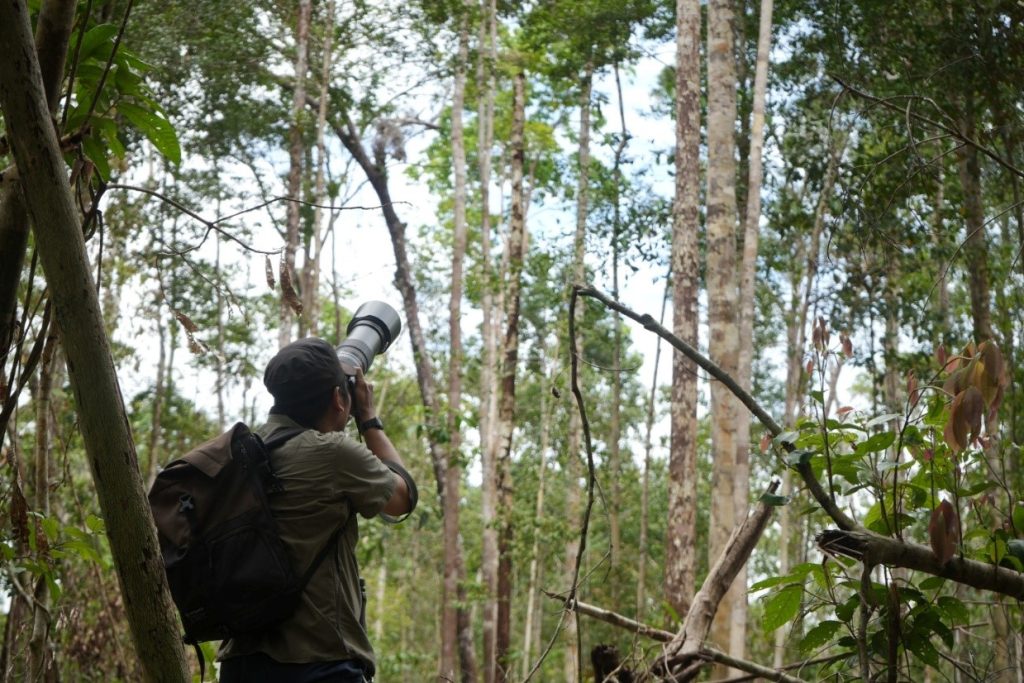
PHOTO: The research team documents a Greater Bird-of-Paradise (Paradisaea apoda) engaged in display activities at a Lek Tree in South Papua, as part of the Papua Conservation program in collaboration with Korindo Group and IPB University.
JAKARTA – Korindo Group’s forestry business units, PT Inocin Abadi (IA) and PT Tunas Timber Lestari (TTL), are reinforcing the habitat protection of the Greater Bird-of-Paradise (Paradisaea apoda) in South Papua through the Papua Conservation program in partnership with IPB University.
This program, which has been running since 2022, encompasses the research, mapping, and monitoring of Lek Trees—critical locations where male Greater Birds-of-Paradise perform display activities to attract mates during the breeding season. The research is led by Prof. Dr. Ani Mardiastuti and the IPB University team.
During the research and monitoring process, the research team identified that one previously identified Lek Tree, located within the Annual Work Plan block, had been included in forest utilization activities. This occurred due to the prior absence of specific technical guidelines or written provisions regulating the protection of Lek Trees within operational Standard Operating Procedures (SOPs).
These findings subsequently served as an evaluation basis for PT IA and PT TTL to strengthen their operational procedures. One of the implemented measures was the refinement of cruising procedures, ensuring that the identification and protection of Lek Trees are conducted from the initial inventory phase.
Korindo Group’s PBPH (Forest Utilization Business License) Manager, Isok Winarjanto, stated on Monday (14/9) that the research findings provided crucial input for the refinement of forest management.
“The monitoring results provide significant input for us. We have followed up on findings that require improvement through corrective measures and procedural refinements,” stated Isok.
These procedures refer to IPB University’s technical guidelines, “A Simple Guide for the Community to Identify Greater Bird-of-Paradise Lek Trees.”
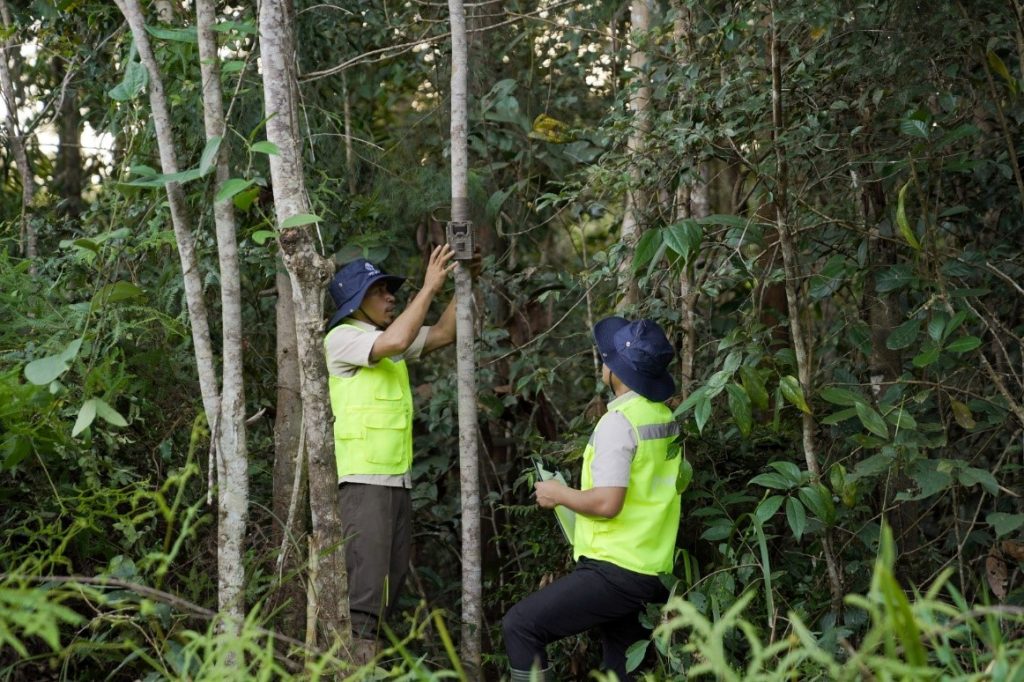
PHOTO: The research team sets up a camera trap to monitor and record the presence of the Greater Bird-of-Paradise in its natural habitat, South Papua.
The procedure commences with identification during the breeding season from May to September, utilizing sound sources as an initial indicator, followed by direct observation of the Greater Bird-of-Paradise and its display activities. A location is confirmed as a lek tree if more than two adult males are found performing display activities, either simultaneously or alternately.
The confirmed lek trees are then recorded with GPS coordinates, marked with conservation signs, and excluded from operational activity plans within the Annual Work Plan (RKT) to preserve their ecological functions.
To reinforce its implementation, the IPB University team recently conducted dissemination and training sessions for field managers, cruising teams, and ESG staff of PT IA and PT TTL.
“The Papua Conservation program with IPB University serves as a platform for us to integrate scientific knowledge with the field team’s experience. This approach assists us in better understanding the area and enhancing the quality of its management,” he explained.
“Biodiversity protection is a vital component of responsible forest management. Monitoring results will continuously serve as the foundation for evaluation and the refinement of field practices,” Isok added.
Through Papua Conservation, PT IA and PT TTL, alongside IPB University, continue to promote science-based forest management that prioritizes environmental sustainability and the protection of habitats for Papua’s endemic species. (*)